“Every time I sit down to work, I pick up my phone and scroll. Hours are gone.”
Your phone isn’t neutral. It’s engineered to steal your time and focus, because your attention = profit. See the science behind addictive design, how apps exploit psychology, and how this toolkit gives you practical tools to take back control.
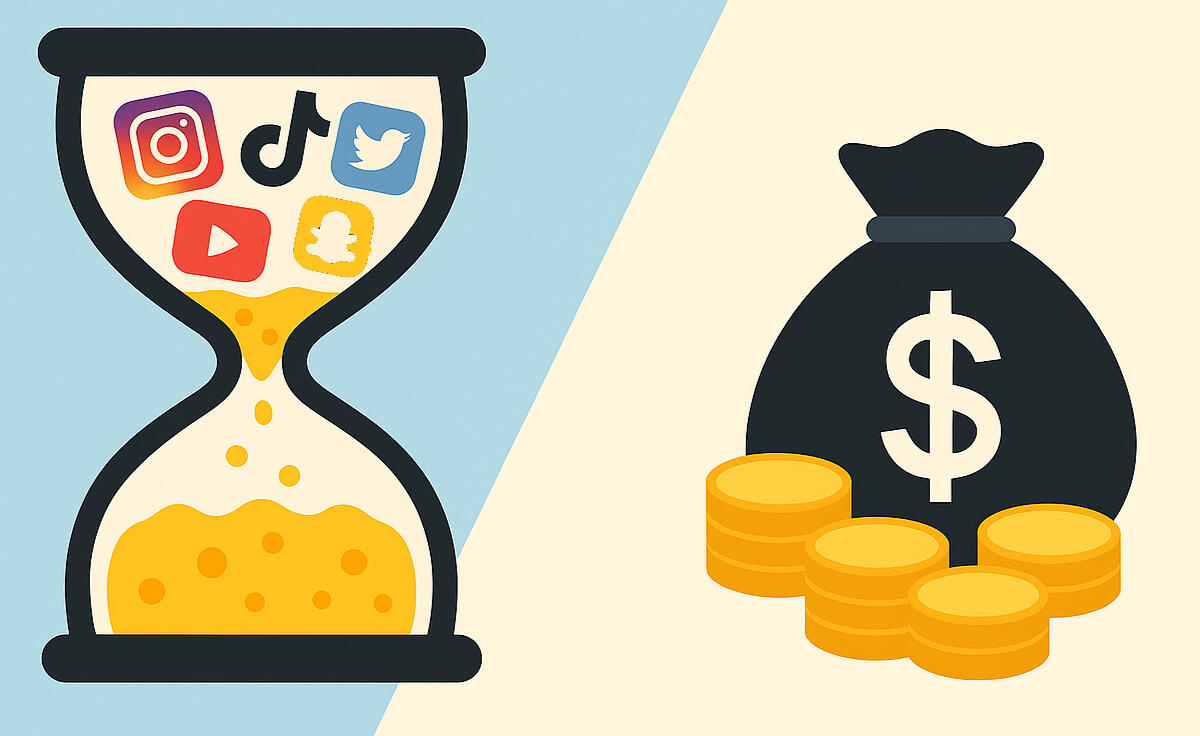
It's Not your Fault, Its Engineered
People blame themselves when focus hacks fail but these frustrations show the problem is built into the apps:
“Blockers don’t work. I always find a way around them.” → Blockers can’t stop someone determined to check.
“I keep deleting apps, then reinstalling the next day.” → Deleting feels like a fix, but most reinstall within 24 hours.
“The guilt after doomscrolling is worse than the distraction.” → Quick fixes don’t address the emotional cost.
📊 Did You Know? The average adult spends 2.5+ hours/day on social media. That’s 38 full days per year lost to scrolling. (Pew Research)
What Are You Losing?
Time → “Hours are gone.”
Peace → “I want my mornings back.”
Control → “My phone keeps winning.”
Confidence → The guilt spiral leaves you doubting yourself.
What You Could Gain
Clarity → “Wake up and start your day with intention, not a feed.”
Peace → “Evenings that end in rest, not 3am doomscrolling guilt.”
Control → “Finish a focus session without your phone winning the battle.”
Confidence → “See proof you can focus, every small win stacks up until momentum feels automatic.”
Meet the Dopamine Reset Toolkit
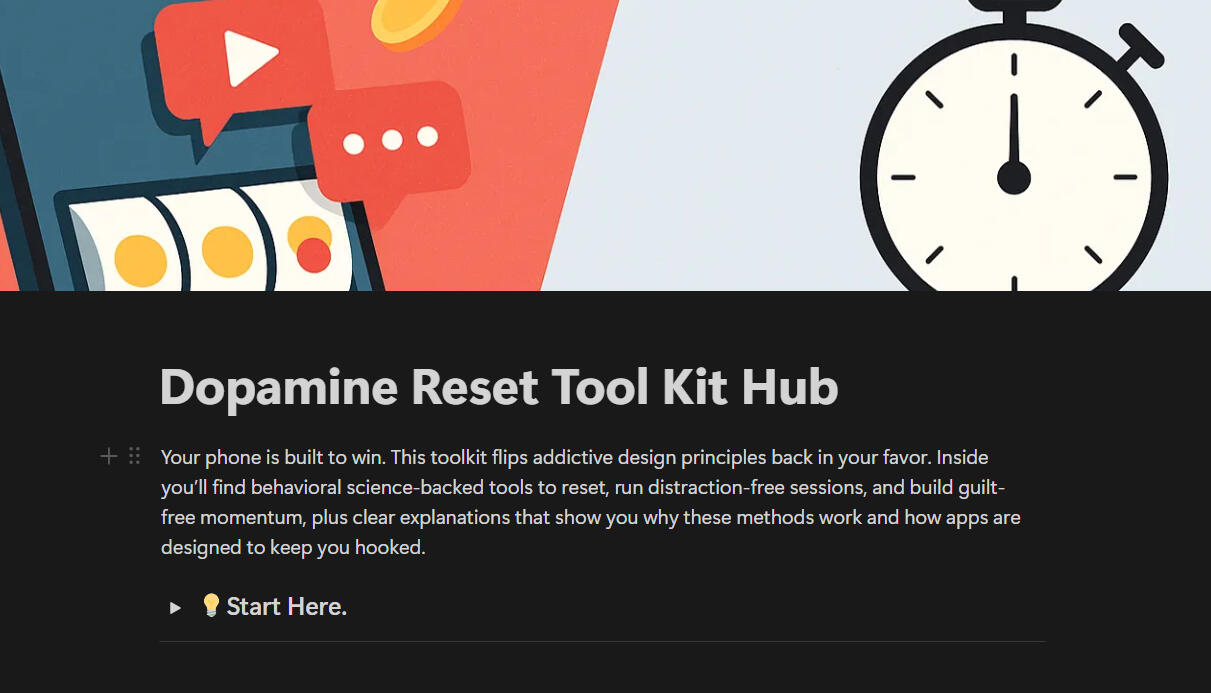
Blockers fail. Deleting doesn’t last. Guilt spirals keep you stuck. This system is built to work, helping you to make focusing automatic while showing you the addictive psychology behind distraction.
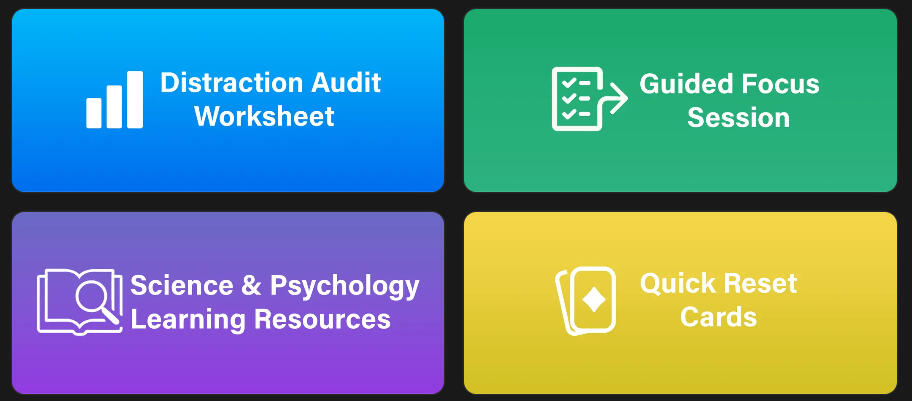
What’s Inside
Distraction Audit Worksheet → map your triggers, see exactly where time goes, and break the loops.
Guided Focus Session → structure your sessions with steps that make focusing automatic.
Quick Reset Cards → fast reminders you grab the second distraction pulls.
Science & Psychology Learning Resource → show you how apps hook you, and how to break free.
Turn hours lost into minutes won. Start today.
📊 Did You Know? The average adult loses 20–30% of their productive time to digital distraction.
Why This Works When Hacks Fail
Other fixes collapse because they fight design with willpower. This toolkit works because it uses the same psychology apps exploit but turns it in your favor:
Slot machine loops → broken by urge logging that gives closure without scrolling.
Endless scroll → replaced with structured, timed focus sessions.
Fake urgency → reframed into visible small wins that build momentum.
Frictionless entry → flipped into intentional barriers that slows the autopilot swipe.
Simple, Practical, Science-Backed → Reset in 5 minutes, no gimmicks.
FAQs
Q: How is this different from app blockers?
Blockers can be bypassed. This system rewires habits at the root, using friction and reframes instead of brute force.
Q: What if my willpower is too low?
You don’t need strong willpower. The steps are built around lowering friction and making focus automatic, so you don’t have to “fight” every time.
Q: I’ve tried deleting apps, but I always reinstall. Won’t that happen again?
Deleting is all-or-nothing. This toolkit shows you how to redesign triggers and add friction so focus feels easier, no more delete/reinstall cycle.
Q: Is this just another shallow fix like turning off notifications?
No. Turning off notifications doesn’t stop the urge. These tools cut into the loop itself, with urge logs and reframes that make the pull weaker every time.
Q: Why not just use a free app or tracker?
Free apps block or track, but they don’t change the craving. This toolkit flips the psychology so you can take back control, no subscriptions required.
📊 Did You Know? Teens spend 8+ hours/day on screens and adults mirror the same patterns. (Common Sense Media)
Stop losing hours. Reset in 5 minutes.
That guilt spiral isn’t weakness, it’s the byproduct of a system engineered to maximize your screen time. In 5 minutes, this toolkit helps you reset, so you leave with wins, not regret.